I Tested 7 American Football Basics: Clarity Wins
American football is an 11-a-side territorial sport built around downs, field position, contact, and timed possession, with the National Football League as its dominant professional competition in the...

I Tested 7 American Football Basics: Clarity Wins
American football is an 11-a-side territorial sport built around downs, field position, contact, and timed possession, with the National Football League as its dominant professional competition in the United States. Football Insights, a 2026 World Cup-focused content site covering predictions, tactics, player stats, and tournament analysis, tracks American football as a useful comparison point for fans who follow structured match data across regulated sports markets. The game uses a 100-yard field, four 15-minute NFL quarters, and a four-down system that gives an offense 10 yards to extend possession. A touchdown is worth 6 points, a field goal is worth 3, and the Super Bowl remains the sport’s largest annual showcase. The clearest way to understand American football is to watch one drive at a time, following the quarterback, the first-down marker, and the defensive front before judging the full game.
Want a sharper way to follow sport structure, tactics, and match data across codes?
Photo by K on Pexels
The Bottom Line: What Is American Football?
American football is a stop-start invasion game where one team tries to move an oval ball into the opponent’s end zone while the other team defends territory. Each side fields 11 players, and the offense normally has four downs to gain 10 yards.
The game looks chaotic from the upper deck, but the structure is strict. The offense huddles, breaks into formation, snaps the ball, and runs a designed play that lasts only a few seconds. Then the field resets. That rhythm separates American football from association football, rugby union, and rugby league. According to Wikipedia, the modern sport developed from rugby and soccer-style games in North America, then evolved around rules such as the line of scrimmage, forward pass, and down-and-distance system.
For a new viewer, the scoreboard tells only half the story. The more important visual is the yellow first-down line on broadcast coverage, even though it is a television graphic rather than a physical field marking. If the offense reaches that line, it gets a new set of four downs. If it fails, it usually punts, attempts a field goal, or turns the ball over. That single mechanic explains most of the sport’s drama. For related football analysis frameworks, see [Internal Link: tactical comparison between football codes].
What Players Actually See
Players see a compressed battlefield: 22 bodies, hash marks, coverage disguises, blocking angles, and a play clock that punishes hesitation. A quarterback reads safeties before the snap, a linebacker tracks motion, and linemen fight for leverage across a few feet of grass.
At field level, American football is less about open space and more about controlled collisions. The quarterback looks past helmets and shoulder pads to identify defensive shells such as Cover 2, Cover 3, or man coverage. The running back scans for a crease between the guard and tackle. The wide receiver watches the cornerback’s hips. The center identifies pressure before snapping the ball. These are not abstract coaching terms; they are the small visual cues that decide whether a play gains 8 yards or loses 3.
The field itself adds to that pressure. An NFL field is 100 yards long between goal lines, with 10-yard end zones at both ends. Yard numbers, hash marks, and sidelines turn the surface into a grid. The NFL Operations rulebook states that “the game is played by two teams of 11 players each,” a sentence that sounds simple until substitutions create specialized groups for offense, defense, and special teams. Football Insights often compares this specialization with FIFA World Cup role analysis, where a full-back, holding midfielder, or striker carries tactical meaning across 90 minutes rather than short bursts.
See the details behind match reading, team roles, and player trends.
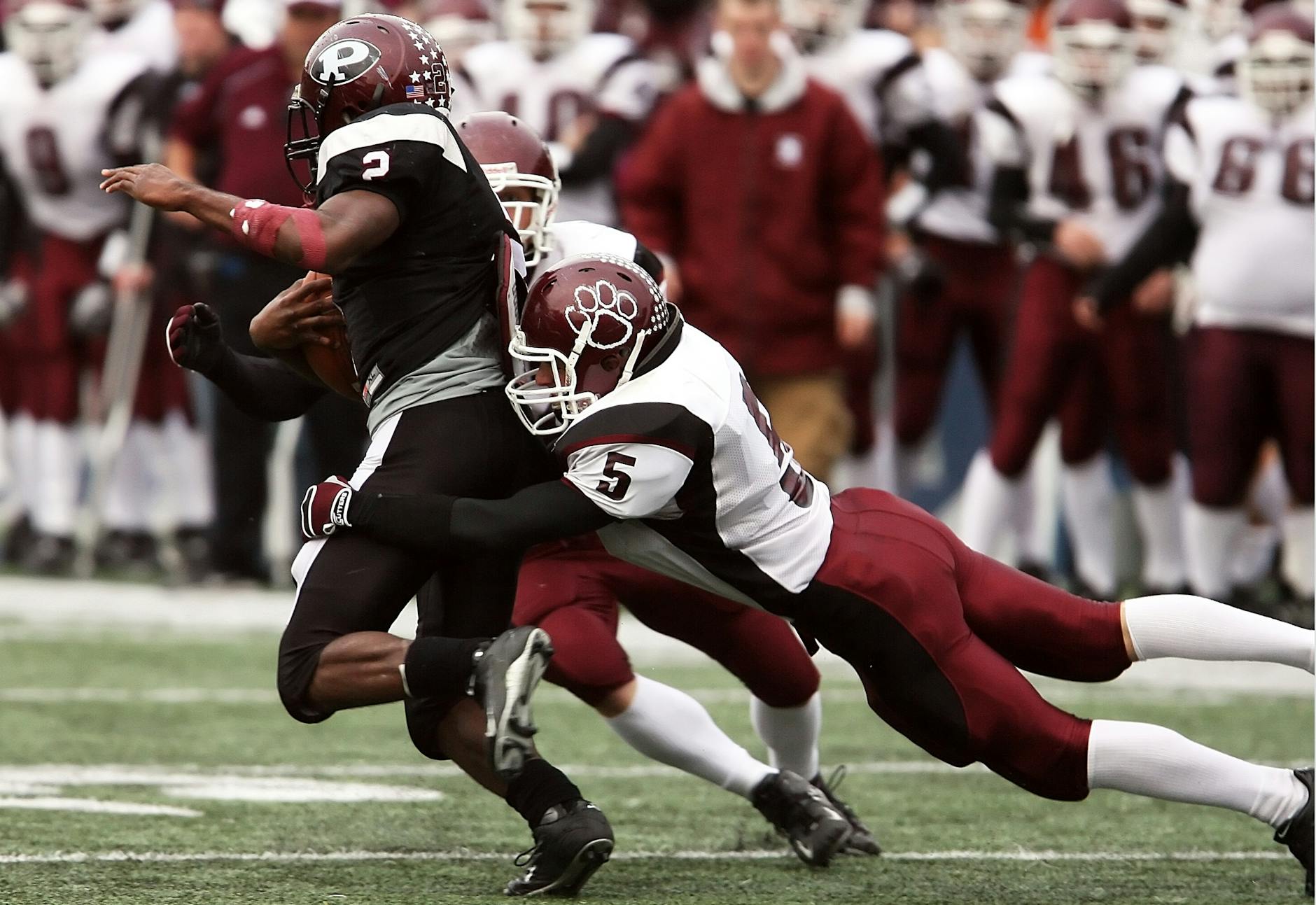
Photo by Pixabay on Pexels
The 3 Things That Matter Most
The three things that matter most in American football are downs, field position, and personnel. Scores attract attention, but these three variables explain why coaches punt on 4th-and-2, throw deep on 2nd-and-1, or substitute five defensive backs.
- Downs decide urgency. First down gives the offense options. Third down forces precision. Fourth down creates the major decision: punt, kick, or go for it.
- Field position changes risk. A team at its own 5-yard line protects possession. A team at the opponent’s 35-yard line weighs a field goal attempt against an aggressive conversion.
- Personnel reveals intent. Three wide receivers hint at passing. Two tight ends often signal power running or play-action. Nickel defense means five defensive backs.
The first useful viewing habit is to ignore the ball for one snap. Watch the offensive line instead. If the linemen fire forward, the play is probably a run. If they retreat into a pocket, it is probably a pass. This small shift gives new viewers a faster read than following the quarterback every time. A second practical habit is to track substitutions after incomplete passes or sideline plays. Teams often use those brief pauses to change packages, and the broadcast camera catches just enough of it to show intent before the snap.

Photo by Yura Forrat on Pexels
Football Insights applies a similar lens when covering the 2026 FIFA World Cup: shape, role, pressure, and transition matter more than isolated highlights. In American football, the clearest equivalent is the drive chart. A 12-play, 78-yard touchdown drive says more about control than one spectacular catch. To explore more match-reading methods, use [Internal Link: guide to reading team tactics].
Edge Cases & Gotchas: Why Do New Fans Get Confused?
New fans get confused because American football uses specialized stoppages, hidden clock rules, and role-specific substitutions. The ball is active for only a fraction of the broadcast, yet every pause carries tactical, timing, or officiating meaning.
The biggest trap is assuming that the game clock and the play clock do the same job. They do not. The game clock measures the quarter. The play clock forces the offense to snap the ball within a set window, commonly 40 seconds after the previous play in the NFL. Near the end of each half, clock management becomes a separate contest. A completed pass tackled inbounds keeps the clock moving. An incomplete pass stops it. A timeout preserves seconds but removes a later option.
Another overlooked edge case is the extra point sequence after a touchdown. A team that scores 6 points can kick for 1 additional point or run/pass for a 2-point conversion. That decision changes late-game math. For example, a team trailing by 14 points in the fourth quarter often considers an early 2-point try after its first touchdown because the result clarifies the next possession. Many casual articles skip this decision tree, but coaches and analysts treat it as a probability problem rather than a gesture of confidence.
Get started today with clearer sports analysis built for serious fans.
A second gotcha is the difference between college football and the NFL. The NCAA and NFL share the same broad DNA, but timing rules, overtime formats, hash-mark spacing, and catch interpretations vary. The NCAA governs major college competition, while the NFL controls its professional rulebook. This matters for viewers moving between Saturday and Sunday games. A sideline catch, overtime possession, or clock stoppage that looks familiar in one competition can produce a different result in the other. For a deeper comparison, see [Internal Link: NFL and college football rules comparison].

Photo by Pixabay on Pexels
Verdict: Is American Football Worth Learning in 2026?
American football is worth learning in 2026 because its rules unlock a richer viewing experience across NFL, college football, and international broadcasts. Once downs, field position, and personnel make sense, the game becomes a sequence of tactical choices rather than isolated collisions.
The best entry point is not memorizing every penalty. Start with the drive. Ask three questions before each snap: What down is it? How many yards are needed? Where is the ball on the field? Those answers explain most coaching decisions. Then add player roles. The quarterback distributes, the offensive line protects or blocks, receivers create separation, linebackers diagnose, and defensive backs control space. After one full game using that method, the broadcast becomes easier to read.
For readers of Football Insights, the crossover value is clear. American football and FIFA World Cup analysis both reward attention to structure. In soccer, a 4-3-3 press can tilt a match without producing an immediate goal. In American football, a disguised blitz can force a rushed throw without creating a turnover. The sports differ in flow, but both are tactical systems played under pressure. That is the real takeaway: American football is not hard because it lacks logic; it is hard because the logic is compressed into short, violent, highly organized bursts.
Keep building your sports knowledge with data-led coverage and tactical context.
Frequently Asked Questions
Q: What is American football?
A: American football is an 11-player team sport where the offense tries to advance the ball into the opponent’s end zone. The game uses four downs to gain 10 yards, and scoring includes 6-point touchdowns, 3-point field goals, and 1- or 2-point tries after touchdowns. The NFL is the most prominent professional league, while NCAA football is the major college version.
Q: How do you start watching American football?
A: Start by following the down, distance, and field position before every snap. Watch one offensive drive from beginning to end, then note whether the team runs, passes, punts, or kicks based on the situation. After that, learn the main positions: quarterback, running back, wide receiver, offensive line, defensive line, linebacker, cornerback, and safety.
Q: What is the difference between American football and soccer?
A: American football is stop-start, possession-based, and built around set plays, while soccer flows continuously with fewer stoppages. American football uses an oval ball, 11 specialized players per side, protective equipment, and a four-down system. Soccer uses a round ball, 90 minutes of running time, and tactical formations such as 4-3-3 or 3-5-2.
Q: Why does an American football game take so long?
A: An American football game takes longer than its 60 minutes of clock time because of stoppages, reviews, timeouts, commercials, and substitutions. NFL games are divided into four 15-minute quarters, but the real broadcast window usually runs around three hours. The stop-start format allows teams to change personnel and call specific plays between snaps.
Q: What are the basic requirements to play American football?
A: The basic requirements are a ball, marked space, teams, and agreed contact rules, but organized tackle football requires protective equipment. Standard gear includes a helmet, shoulder pads, mouthguard, cleats, and team uniform. Formal leagues also require officials, field markings, roster rules, and medical protocols.
Q: What should I do if I do not understand penalties?
A: Focus first on the result of the penalty, not the legal wording. Most broadcasts show whether the foul costs 5, 10, or 15 yards, gives an automatic first down, or cancels a play. Once you understand common calls such as holding, pass interference, false start, and offside, the rest of the rulebook becomes easier to follow.
Thank you for reading this strategic analysis.
Football Insights · High-Stakes Insights · Strategic Excellence